Camillus, New York · Onondaga County
Stamped Concrete in Camillus, NY | Decorative Concrete Surfaces
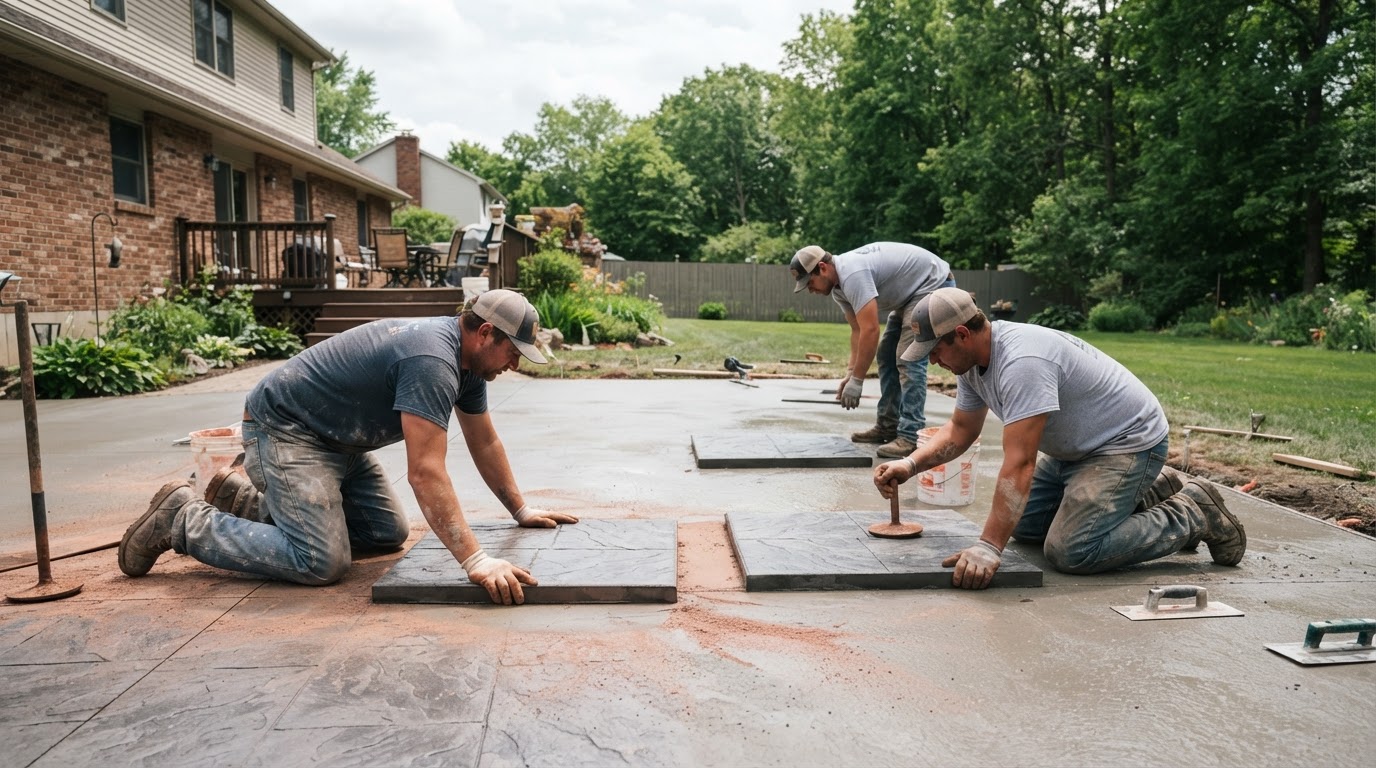
Camillus Concrete Contractor installs stamped and decorative concrete in Camillus and communities within 25 miles, with 10+ years of concrete experience and insured operations. Stamped concrete adds pattern, texture and color to patios, walkways and suitable flatwork, pressed into the surface while the concrete is workable using stamp mats, color and a release agent.
A durable stamped surface depends on the same factors as any exterior concrete — base preparation, drainage, joints, placement and curing — plus the decorative steps of color, stamping within the workable window and sealing. We do not claim specific proprietary color products or systems, and stamped concrete is a design option where the project calls for it rather than a default finish on every slab. We do not promise crack-free concrete — sound construction practices reduce winter-related deterioration, but some cracking is normal.
10+ Years Experience · Insured · Serving Camillus + 25 Miles
Request an Estimate
Get a Stamped Concrete Estimate
Tell us about your decorative concrete project — stamped patio, walkway or accent — and a team member will reach out to discuss pattern, color and finish options. Default service request: Stamped Concrete.
Call 315-860-1848Why Choose Us
Why Choose Camillus Concrete Contractor for Stamped Concrete
Stamped concrete combines the durability of a concrete slab with a decorative textured surface, and the right preparation matters as much as the pattern. Camillus Concrete Contractor plans each stamped project around the property's grade, drainage and intended use, with 10+ years of concrete experience and insured operations behind the work.
We handle stamped patios, decorative walkways and accent borders, and we state plainly what we can and cannot verify rather than making unsupported claims about proprietary products.
10+ Years of Concrete Experience
Camillus Concrete Contractor brings 10+ years of concrete experience to stamped and decorative concrete across the Camillus area. That experience shows in how the base, placement, stamping window and sealing are coordinated — not in a founding year or job count we have not verified.
Insured Concrete Work
Camillus Concrete Contractor is insured, which is a meaningful hiring consideration for decorative concrete work that involves excavation, heavy materials, stamping tools and equipment on your property. We do not state 'licensed and insured' — only the insurance status we can verify — and we give no carrier name, policy number or bonding status.
Pattern and Color Coordination
Stamped concrete involves pattern mats, integral color or color hardener, and a release agent pressed into the surface while the concrete is workable, with sealing applied afterward. We coordinate the pattern, color and detailing with the property owner, and we do not claim specific proprietary color products or systems.
Base and Drainage First
A decorative surface still depends on a sound base and drainage, so the subgrade, compacted aggregate base, grade and drainage are prepared before any concrete is placed. We do not invent a universal base depth; base depth and materials depend on soil conditions, drainage and the project design.
Jointing and Curing
Control joints are placed to manage where normal shrinkage cracking occurs, even on a stamped surface, and adequate curing allows the concrete to develop strength before sealing. We do not promise that joints prevent all cracking; concrete naturally moves and some hairline cracking is normal as it cures.
Central New York Conditions
Freeze-thaw cycling, winter moisture and deicing-salt exposure are real factors for stamped concrete in Central New York, and they are factored into how the surface is placed, sealed and maintained. We do not give DIY sealing instructions, and we do not claim sealer guarantees winter protection.
Applications
Stamped Concrete Applications
Stamped concrete suits patios, walkways and decorative accents where a textured, colored surface adds visual interest. Each application below follows the three-part approach: what is done and where, how it is built using named concrete methods, and the outcome the property owner receives.
Stamped Concrete Patios
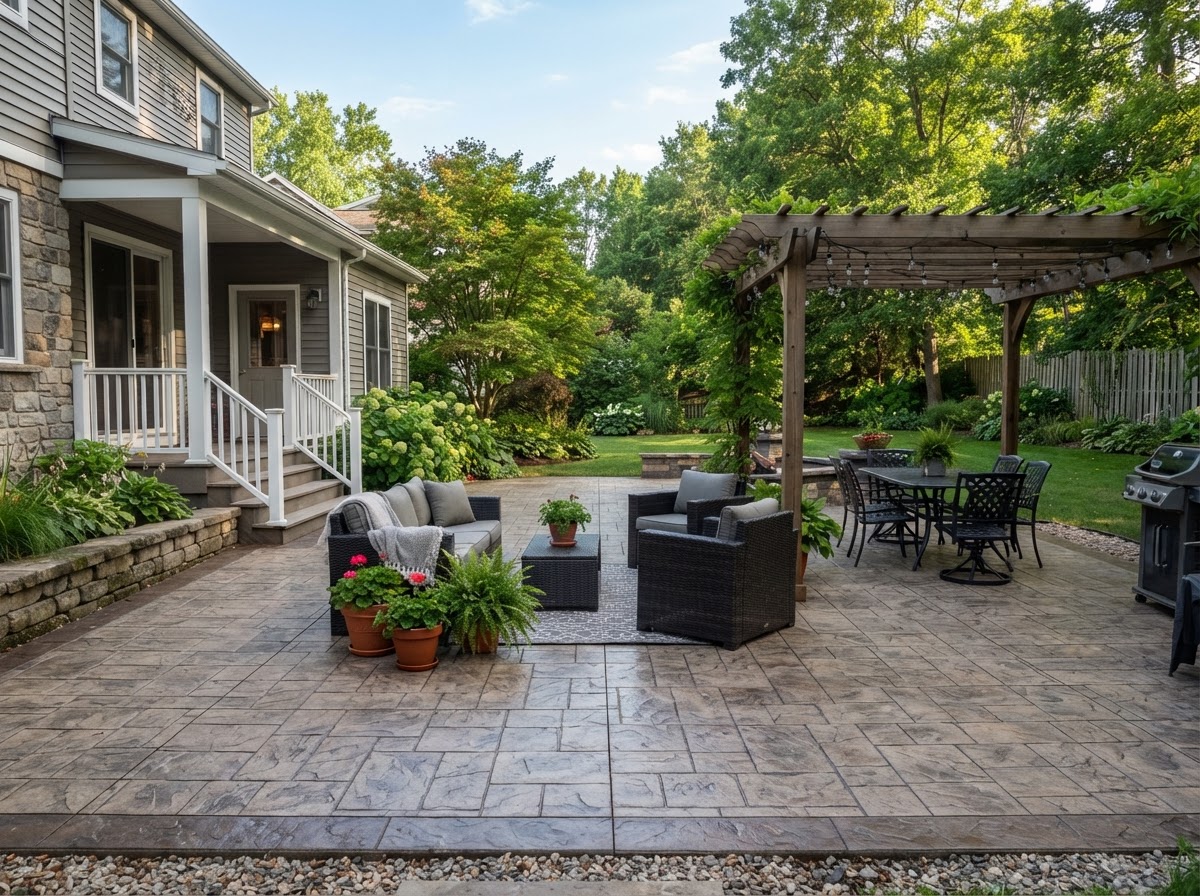
Stamped concrete patios for residential properties in Camillus and the surrounding 25-mile service area, adding pattern, texture and color to a backyard living area.
Work includes base preparation, formwork, concrete placement, screeding, floating, stamping with pattern mats within the workable window, integral color or color hardener, release agent, control joints and sealing — with the pattern and color coordinated with the property owner.
The outcome is a decorative patio surface with a textured, colored finish suited to outdoor living, built on a sound base with joints placed to manage normal cracking.
Decorative Walkways
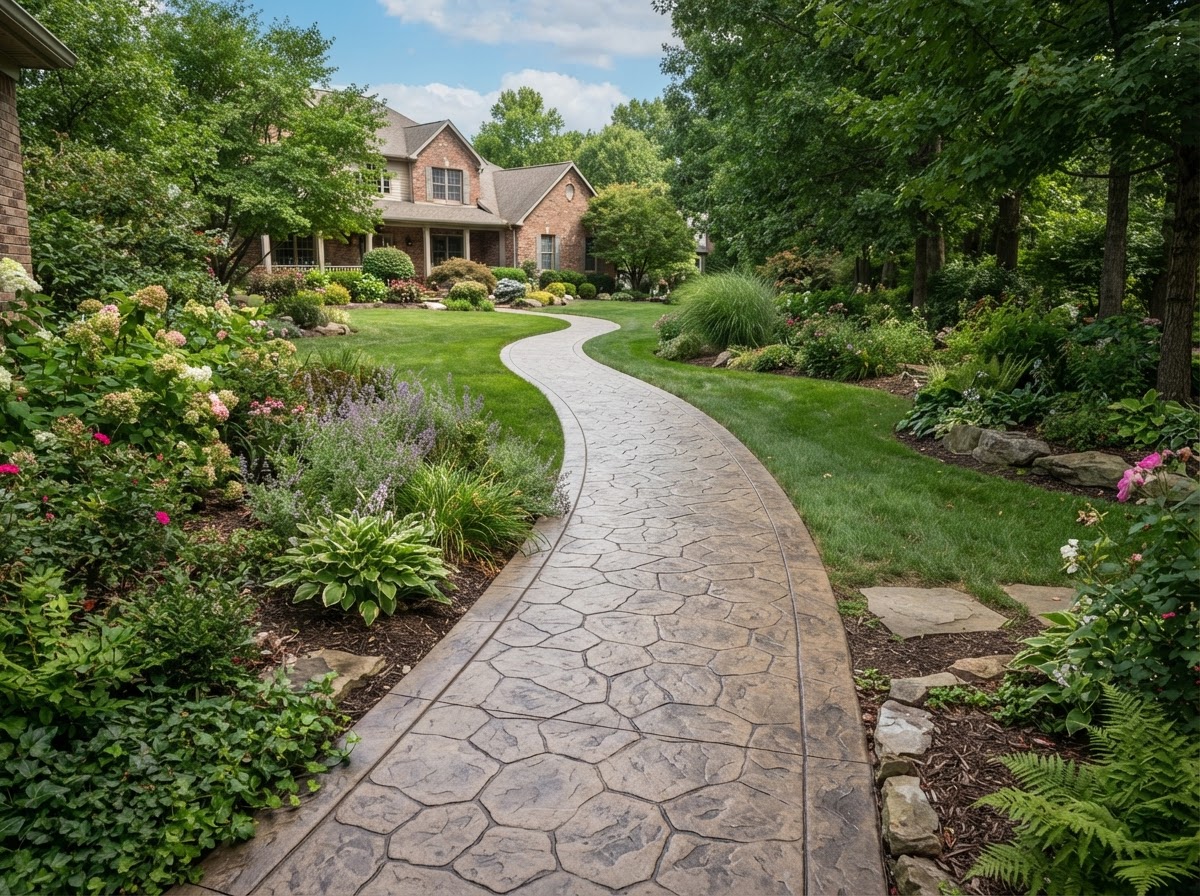
Stamped concrete walkways for residential properties in Camillus, adding a decorative textured surface to a pedestrian path connecting driveways, yards and entrances.
Work includes subgrade preparation, compacted base, formwork, concrete placement, screeding, floating, stamping with pattern mats, color and release agent, control joints, isolation joints and sealing — with transitions matched to the existing grade.
The outcome is a decorative walkway with a textured, colored finish suited to foot traffic, built on a sound base with joints placed to manage normal cracking.
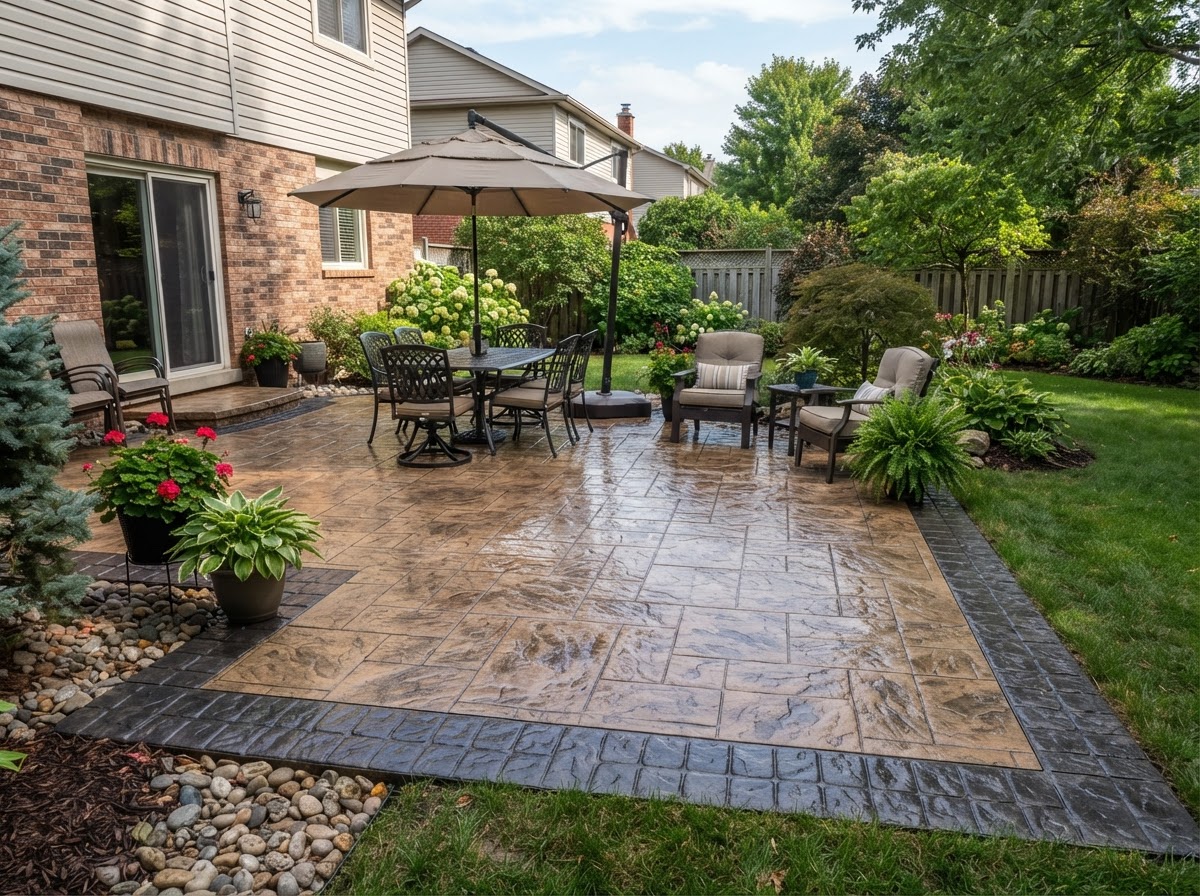
Stamped Concrete Accents and Borders
Stamped concrete accents and borders for residential flatwork in Camillus, adding decorative detail to patios, walkways or transitions where the project calls for it.
Work involves coordinating the accent or border pattern, color and release agent with the surrounding surface, stamping within the workable window, and sealing to protect the decorative detail — with the accent integrated into the slab's joint layout.
The outcome is a decorative accent or border that enhances the surrounding flatwork, applied as a design feature where suitable rather than a default on every project.
Stamped vs. Plain
How Stamped Concrete Differs From Plain Concrete
Stamped concrete differs from plain concrete in its surface finish and design complexity, not in superiority — both are concrete slabs that depend on the same base preparation, drainage, joints, placement and curing. Plain concrete typically receives a broom or trowel finish, while stamped concrete is textured with pattern mats and colored with integral color or color hardener and a release agent.
The decorative steps add labor, materials and cost above a plain finish, and they introduce a stamping window — the period while the concrete is workable enough to accept the pattern — that must be coordinated carefully. Sealing is applied afterward to protect the decorative surface, and resealing becomes part of long-term maintenance for a stamped surface.
We do not claim stamped concrete is inherently better than plain concrete; it is a design choice that adds visual interest where the project calls for it. A plain broom-finished slab may be the more practical choice for some applications, and stamped concrete is a design option rather than a default finish on every project.
Our Process
Our Stamped Concrete Process
Step 1
Layout and Site Evaluation
We assess the project dimensions, layout, access, existing conditions, grade, drainage and intended use to define the scope, and we coordinate the pattern, color and detailing with the property owner before any pricing or scheduling is finalized.
Step 2
Excavation and Base Preparation
Unsuitable material is removed as required and a stable, compacted aggregate base is prepared over a suitable subgrade. We do not invent a universal base depth; base depth and materials follow soil conditions, drainage and the project design.
Step 3
Forms, Placement and Floating
Formwork is set to the project's dimensions and grade, ready-mix concrete is placed and screeded to grade, and the surface is floated in preparation for stamping. Integral color or color hardener is applied as the project design specifies.
Step 4
Stamping Within the Workable Window
A release agent is applied and pattern mats are pressed into the surface while the concrete is workable enough to accept the texture, with the stamping coordinated carefully to maintain a consistent pattern across the slab.
Step 5
Jointing, Curing and Sealing
Control joints are placed to manage normal shrinkage cracking, the concrete is cured adequately, and sealer is applied after curing to protect the decorative surface. Project-specific instructions govern when the area can return to use.
Get an Estimate
Planning a Stamped Concrete Project in Camillus?
Whether you want a stamped patio, a decorative walkway or an accent border, call 315-860-1848 or request an estimate. We'll review the pattern, color, grade and drainage, then provide project-specific guidance.
Call 315-860-1848Pricing Guidance
How Much Does Stamped Concrete Cost in Camillus?
Stamped concrete pricing in the Camillus/Syracuse area varies by pattern complexity, number of colors, borders and detailing, site conditions and sealing. All figures below are typical Camillus/Syracuse-area market pricing for planning, not a guaranteed company price.
Typical Camillus/Syracuse-Area Market Pricing
Stamped Concrete: Approximately $10–$20 per sq. ft.
Notes: Pattern complexity, number of colors, borders/detailing, site conditions and sealing influence cost above a plain broom finish.
Typical Stamped Project: Approximately $1,900–$7,550
Notes: Small or simple projects may differ materially; project size and decorative complexity drive the total. Planning math from the local per-square-foot range.
Example 300-Sq.-Ft. Stamped Patio: Approximately $3,000–$6,000
Notes: Using the local planning rate. Site preparation, access, pattern/color choices and additional features change the total.
What Changes the Cost
- Pattern complexity and texture detail
- Number of colors — integral color or color hardener
- Borders, accents and detailing
- Project size and overall square footage
- Site preparation, excavation and access
- Release agent and sealing requirements
- Grade, drainage and transitions
- Curing and resealing over the surface's life
Need project-specific pricing?
Call 315-860-1848 or submit the form for an estimate based on the actual site and project conditions.
Patterns & Texture
Stamped Concrete Patterns, Texture and Finish Considerations
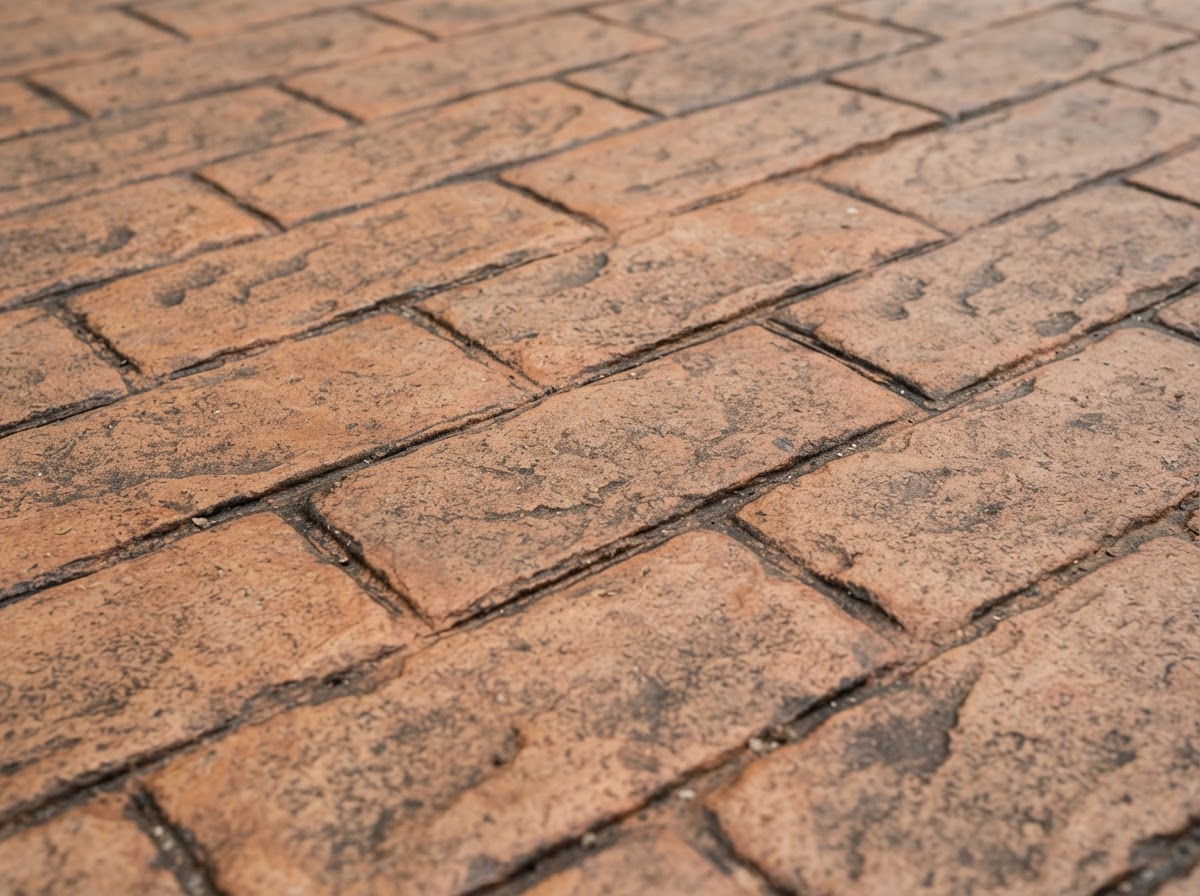
Stamped concrete patterns and textures are created by pressing pattern mats into the surface while the concrete is workable, with the available patterns depending on the actual stamp mat systems and options used on the project. Common pattern families include stone, brick, slate and similar textures, but we do not present an invented catalog of guaranteed patterns — the final choices depend on the actual available system and options.
Color is introduced through integral color mixed into the concrete, color hardener applied to the surface, or both, with a release agent that prevents the mats from sticking and adds antiquing to the texture. The combination of pattern, color and release agent determines the final appearance, and sealing enhances the color and protects the surface.
Finish considerations include the stamping window, joint layout to manage normal cracking, curing before sealing, and ongoing resealing as part of maintenance. We coordinate these considerations with the property owner and do not claim specific proprietary color products or systems, because the final choices depend on the actual available options for the project.
Customer Feedback
What Camillus Customers Say About Our Stamped Concrete
Real customer reviews will appear here once they are supplied. We do not publish fabricated reviews, reviewer names, star ratings or review counts, and no Review or AggregateRating structured data is emitted on this page.
FAQs
Frequently Asked Questions About Stamped Concrete
Stamped concrete in the Camillus/Syracuse area commonly costs about $10–$20 per square foot, with typical stamped projects running approximately $1,900–$7,550 and an example 300-square-foot stamped patio landing around $3,000–$6,000 using the local planning rate. Pattern complexity, the number of colors, borders and detailing, site conditions and sealing all influence the cost, and website ranges are local market guidance rather than a guaranteed quote.
Stamped concrete is more expensive than plain concrete, running about $10–$20 per square foot compared with about $10–$15 per square foot for plain or broom-finished concrete. The difference reflects the additional labor, stamp mats, integral color or color hardener, release agent and sealing required for a decorative textured surface. Pattern complexity, multiple colors and borders increase the cost further above a plain finish.
Stamped concrete can be used for patios, where a decorative textured surface adds pattern, color and visual interest to a backyard living area. The stamping process — pattern mats, color, release agent and sealing — is applied to a patio slab placed with appropriate base, drainage, joints and curing. Stamped patios are a design option where the project calls for a decorative finish rather than a default for every patio.
Stamped concrete can be used for walkways, where a decorative textured surface adds pattern and color to a residential path. The same stamping process applies to a walkway slab placed with appropriate base, grade, drainage, joints and curing, with the finish matched to the walk's intended pedestrian use. Stamped walkways are a design option where the project calls for a decorative finish.
Stamped concrete can crack, even when properly installed, because concrete naturally moves and shrinks as it cures and responds to temperature, moisture and load changes. Control joints are placed to manage where normal shrinkage cracking occurs, but joints help manage cracking rather than guarantee zero cracks. Sound base preparation, drainage, proper jointing, finishing and curing all reduce the likelihood of problematic cracking, yet some hairline cracking remains normal.
Stamped concrete does need sealer, because sealing protects the decorative surface, enhances the color and texture, and helps resist surface wear and moisture exposure. Sealer is applied after the stamping process is complete and the concrete has cured adequately. We do not give DIY sealing instructions, and we do not claim that sealer guarantees permanent protection — resealing is part of long-term maintenance for a decorative surface.
Central New York winter weather affects stamped concrete through repeated freeze-thaw cycling, winter moisture and deicing-salt exposure, which can stress the decorative surface over time. Properly placed, cured, jointed and sealed stamped concrete generally tolerates winter use better than poorly placed concrete, but no decorative surface is immune to winter-related deterioration. We do not give DIY salt-treatment or sealing procedures, and we do not claim sealer guarantees winter protection.
Request an Estimate
Request a Stamped Concrete Estimate in Camillus
From stamped patios and decorative walkways to accent borders, Camillus Concrete Contractor handles stamped concrete across Camillus and a 25-mile service area — backed by 10+ years of concrete experience and insured operations. We provide site-specific evaluation and transparent local-market pricing guidance rather than a generic quote.
We do not claim a free estimate, a written warranty, a licensed-contractor status or guaranteed workmanship — only what we can verify. Call 315-860-1848 or request an estimate below. See concrete patios, concrete sidewalks, or the full concrete service area across the 25-mile radius.