Camillus, New York · Onondaga County
Concrete Repair in Camillus, NY | Cracks, Spalling & Resurfacing
Camillus Concrete Contractor repairs cracked, spalling, scaling and deteriorated concrete in Camillus and communities within 25 miles, with 10+ years of concrete experience and insured operations. Whether a slab needs a localized crack repair, a bonded resurfacing evaluation or a partial replacement, the underlying condition determines which approach makes sense — not a one-size recommendation applied to every surface.
From driveways and patios to sidewalks, slabs and garage floors, exterior concrete in Central New York faces freeze-thaw exposure, winter moisture and deicing-salt exposure that contribute to cracks, spalling, scaling, delamination and surface deterioration over time. We assess the substrate and drainage before recommending a repair method, because resurfacing over a failed base or patching a crack caused by ongoing movement rarely lasts. For driveway-specific or sidewalk-specific damage, see our dedicated driveway repair and sidewalk repair pages.
10+ Years Experience · Insured · Serving Camillus + 25 Miles
Request an Estimate
Get a Concrete Repair Estimate
Tell us about the cracks, spalling or damage on your concrete surface and a team member will reach out to discuss whether repair, resurfacing or replacement fits the condition. Default service request: Concrete Repair.
Call 315-860-1848Why Choose Us
Why Choose Camillus Concrete Contractor for Concrete Repair
Concrete repair is only as good as the assessment behind it. A crack patch applied over a moving base or a resurfacing overlay bonded to a deteriorated substrate will not last, which is why we evaluate the underlying condition before recommending any repair method.
We bring 10+ years of concrete experience and insured operations to every concrete repair project across the 25-mile service area, and we state plainly what we can and cannot verify rather than making unsupported claims.
10+ Years of Concrete Experience
Camillus Concrete Contractor brings 10+ years of concrete experience to concrete repair across the Camillus area. That experience shows in how damage is assessed — reading whether a crack or spalled surface reflects an isolated issue or a deeper base problem — rather than a specific job count or founding year we have not verified.
Insured Concrete Work
Camillus Concrete Contractor is insured, which is a meaningful hiring consideration for repair work that involves demolition, grinding, patching and equipment on your property. We do not state 'licensed and insured' — only the insurance status we can verify — and we give no carrier name, policy number or bonding status.
Assessment Before Repair
Every concrete repair starts with assessing the damage type, extent and underlying condition before a method is chosen. A localized crack, a spalled surface and a settled slab each call for different approaches, and we do not recommend resurfacing or patching when the substrate or base will not support a lasting repair.
Surface Preparation Focus
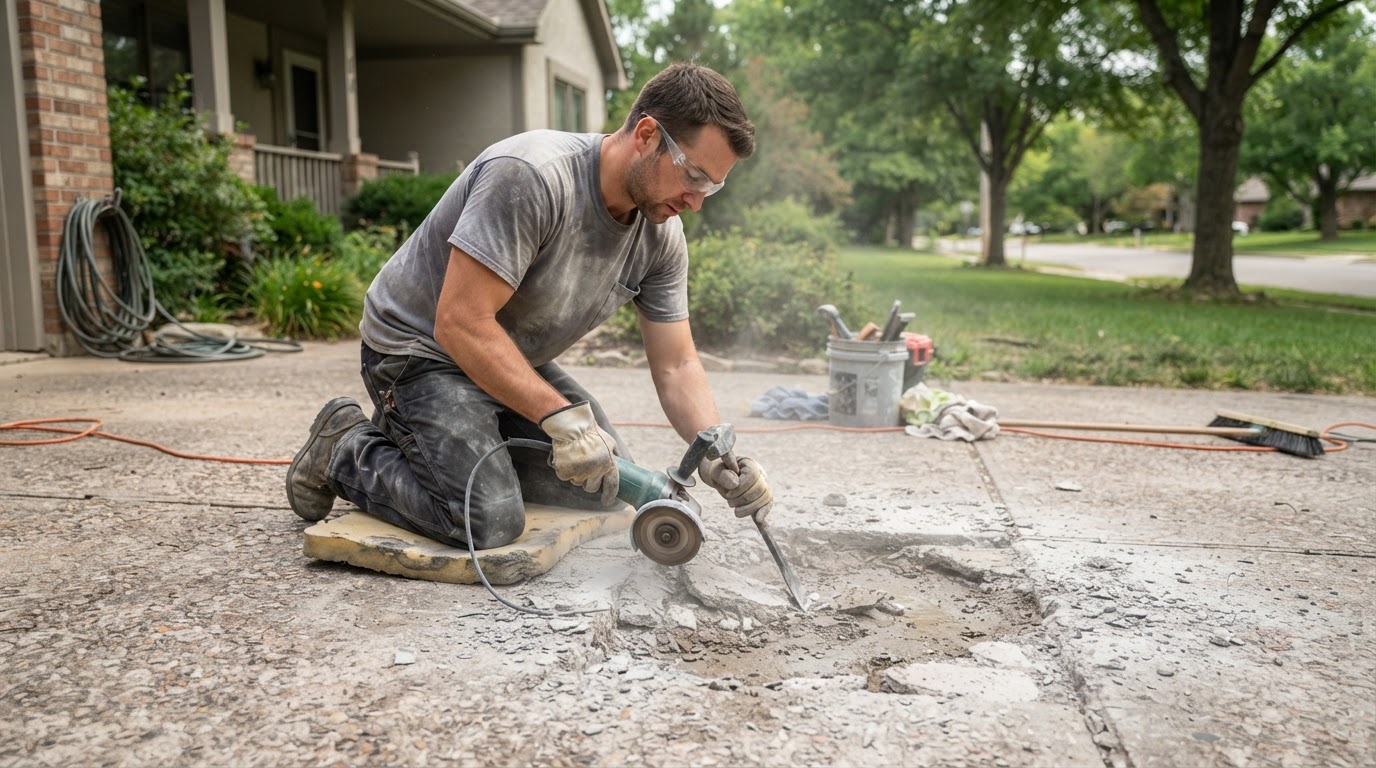
Sound surface preparation is what makes a repair bond — removing loose, spalled and delaminated material to expose a clean substrate, saw-cutting repair boundaries where appropriate, and addressing drainage before applying repair mortar or placing new concrete. We do not skip preparation to apply a quick cosmetic patch.
Repair vs. Replacement Guidance
Not every damaged slab is repairable, and we say so plainly. When deterioration is widespread, the slab has moved or the base has failed, we explain why replacement may be the better long-term value rather than selling a repair that will not hold. The recommendation follows the condition, not a default preference.
Central New York Conditions
Freeze-thaw cycling, winter moisture and deicing-salt exposure are real factors in how Camillus concrete deteriorates, and we factor those conditions into repair recommendations. Properly cured and jointed exterior concrete generally tolerates winter use better than poorly placed concrete, but no repair is immune to ongoing winter exposure if the underlying conditions are not addressed.
Problems We Repair
Concrete Problems We Repair
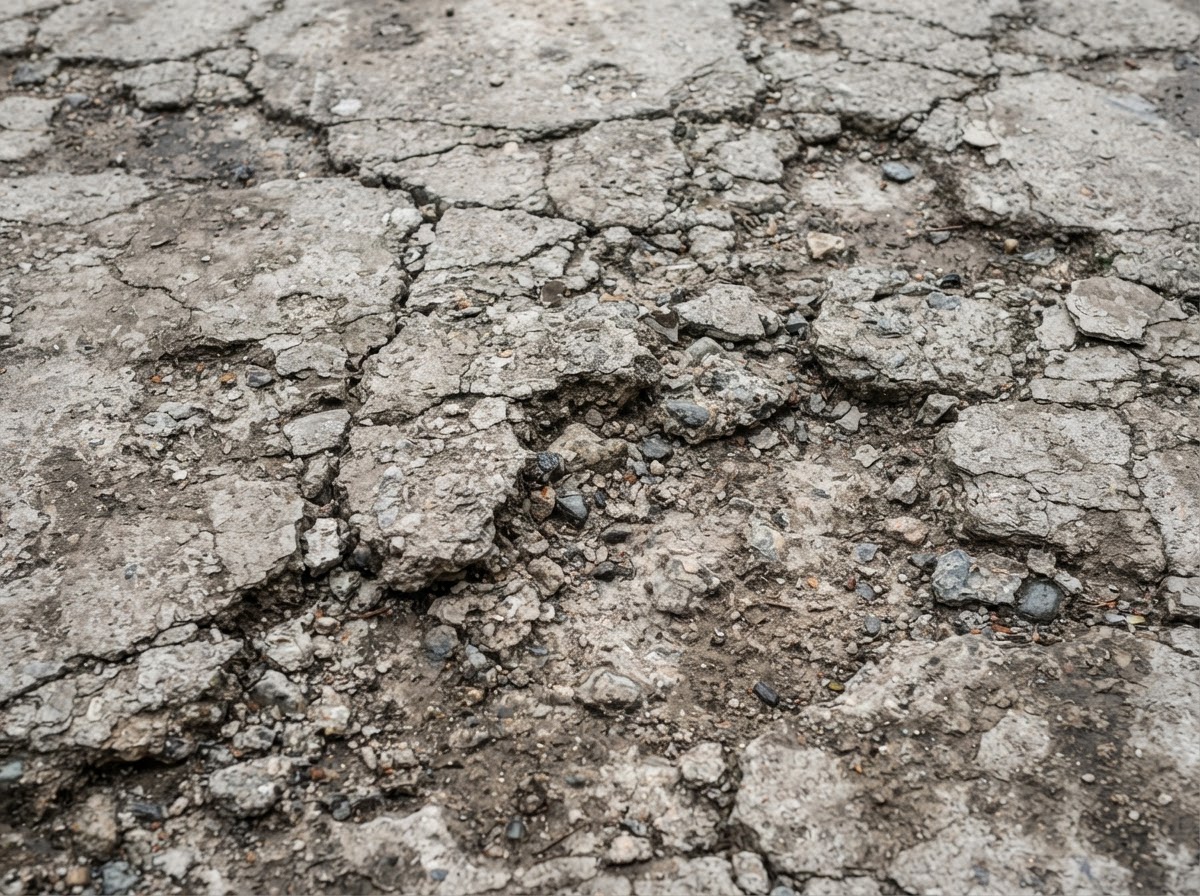
Concrete damage ranges from isolated cracks to spalling, scaling and worn surfaces suitable for resurfacing. Each repair type below follows the three-part approach: what is done and where, how it is built using named concrete methods, and the outcome the property owner receives.
Cracked Concrete
Localized crack repair addresses isolated hairline, shrinkage or settling cracks in residential concrete slabs in Camillus and the surrounding 25-mile service area, where the surrounding concrete remains otherwise sound.
Work includes cleaning the crack, evaluating whether it is active or stable, preparing the substrate, applying repair mortar or crack filler appropriate to the crack type, and finishing the surface to blend with the surrounding concrete — with control joints reviewed to manage future cracking.
The outcome is a stabilized, sealed crack that limits water intrusion and slows further deterioration, though crack repair does not guarantee the crack will never reopen if the underlying movement continues.
Spalling and Scaling
Spalling and surface scaling repair addresses the deteriorated surface layer on concrete slabs in Camillus, where freeze-thaw exposure and deicing-salt exposure have contributed to surface breakdown but the slab beneath remains structurally adequate.
Work includes removing loose, delaminated and scaled material to expose a sound substrate, surface preparation, and applying a bonded resurfacing overlay or repair mortar — with the existing slab condition evaluated first to confirm resurfacing is appropriate.
The outcome is a renewed, more uniform surface where the substrate supports a bonded repair; resurfacing cannot correct structural or base problems beneath the slab, and a failed base may require replacement instead.
Worn Concrete Suitable for Resurfacing
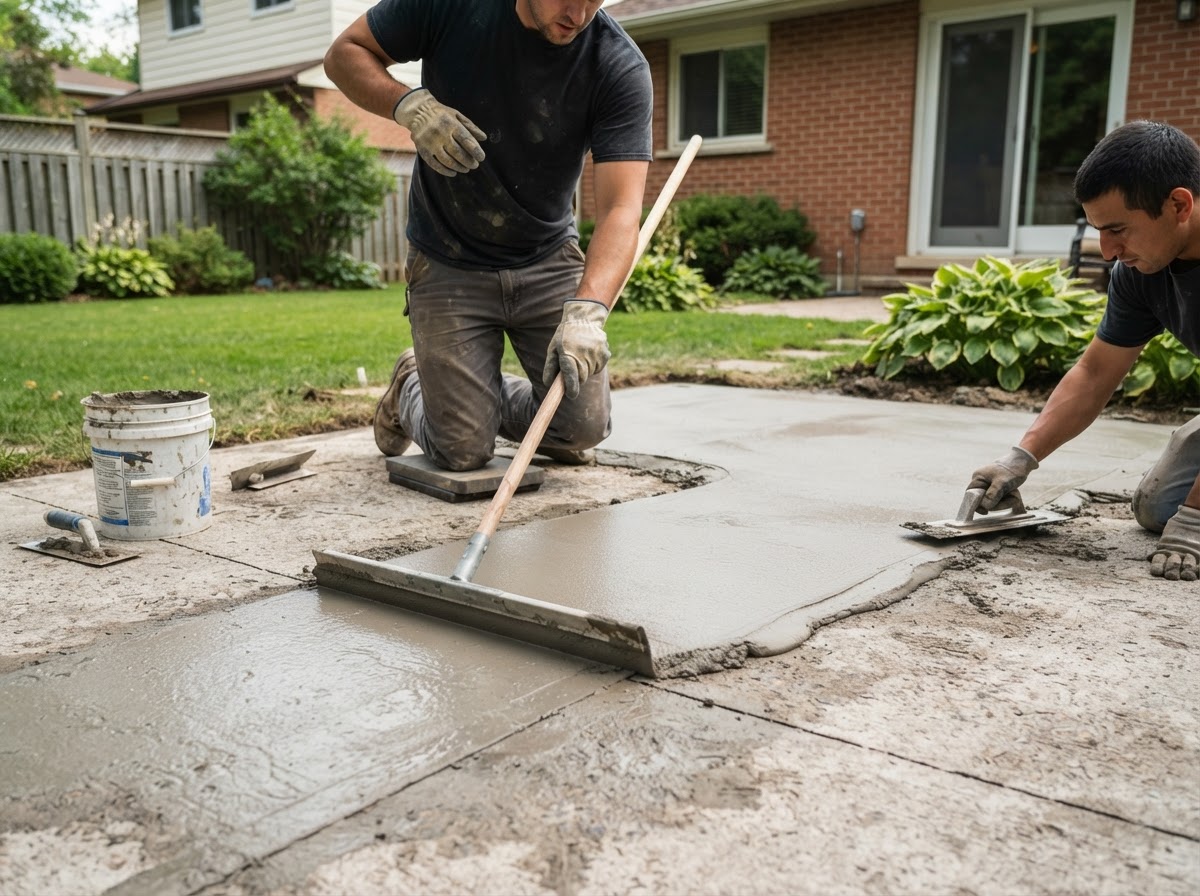
Resurfacing renews a worn but structurally sound concrete surface in Camillus, applying a thin bonded overlay over an existing slab that remains sufficiently sound to support the surface system.
Work includes thorough surface preparation to expose a clean substrate, applying a bonded overlay or resurfacing mortar with a squeegee or trowel, and finishing to the desired texture — with the existing slab condition evaluated first to confirm it is a candidate for resurfacing.
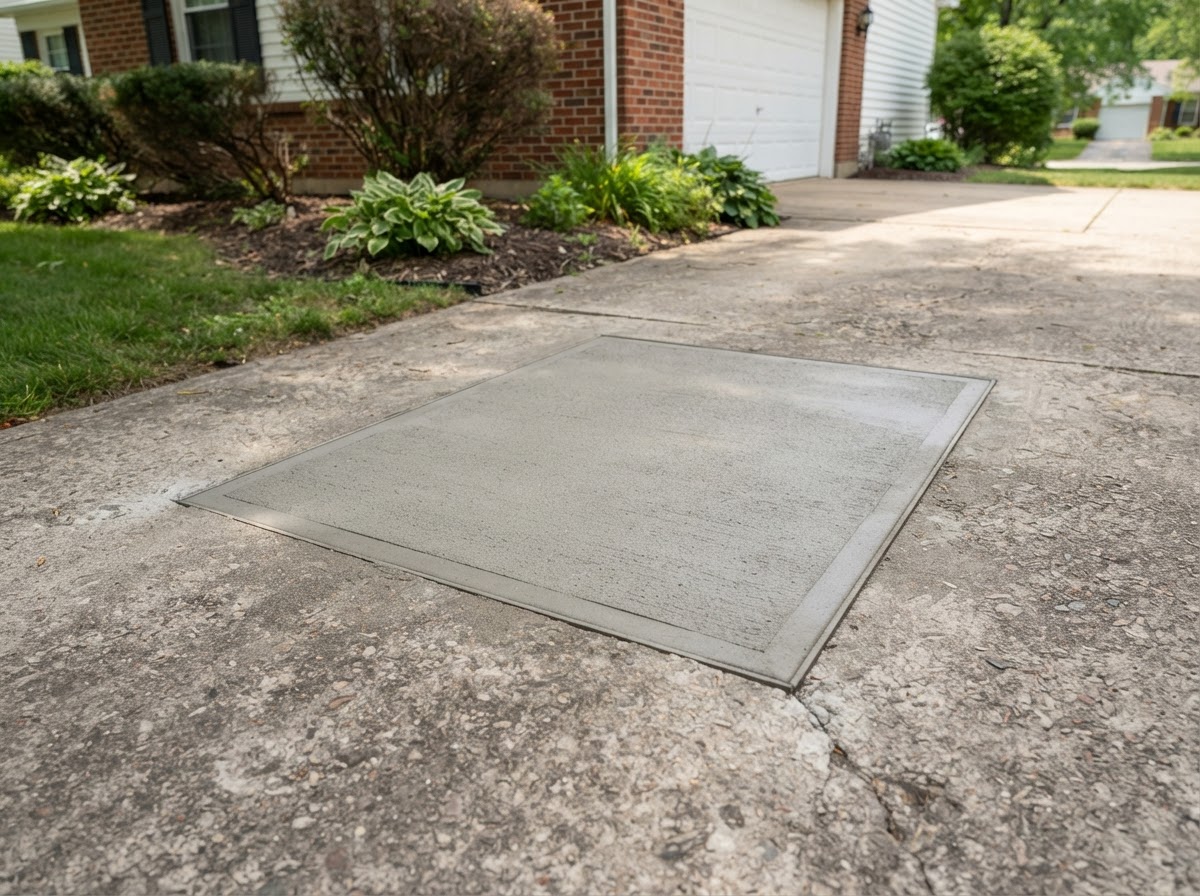
The outcome is a renewed surface where the substrate supports a bonded overlay; resurfacing does not correct settlement, base failure or structural damage, and a failed slab may require replacement instead.
Resurfacing Suitability
When Is Concrete Resurfacing Appropriate?
Concrete resurfacing is appropriate only when the existing slab remains sufficiently sound to support a bonded surface system, meaning the deterioration is limited to the surface and the slab beneath is structurally adequate.
Resurfacing works for surface scaling, spalling and wear on a slab that is otherwise stable — no significant settlement, no widespread structural cracking and no failed base. The existing concrete must be clean, sound and properly prepared so the overlay bonds, and surface preparation is the step that determines whether the resurfacing will adhere.
Resurfacing is not appropriate when the slab has settled, moved, cracked extensively from base failure or deteriorated through its full depth. In those cases, the problem is structural or beneath the slab, and a thin overlay will not correct it — replacement becomes the more durable option because it allows the base to be corrected.
We evaluate the substrate, drainage and slab condition before recommending resurfacing, and we do not sell a resurfacing overlay for a slab that will not support it. The recommendation follows the actual condition of the concrete, not a default preference for either approach.
Replacement
When Is Replacement Better Than Repair?
Replacement is better than repair when deterioration is widespread, slabs show significant movement or settlement, or the underlying base conditions make localized repairs unlikely to last. Repeated patching that keeps failing, broad pattern cracking across multiple sections and severe surface breakdown covering most of the slab all point toward replacement.
When cracks keep returning after repeated patching, when a slab has dropped or tilted, or when the base has failed, the underlying conditions are driving the deterioration and a surface repair will not address them. Replacement allows the base to be corrected so the new concrete rests on stable, properly compacted ground rather than covering a failed surface with a thin overlay.
We do not diagnose a structural cause remotely or give DIY fix instructions. A site evaluation determines whether the damage is isolated enough for repair or whether the slab has reached the point where replacement offers better long-term value. The recommendation follows the actual condition of the concrete and base, not a default preference for either approach.
Our Process
Our Concrete Repair Process
Step 1
Damage Assessment
We assess the damage type — cracks, spalling, scaling, delamination or settlement — along with the extent, depth and surrounding slab condition to understand whether the deterioration is isolated or reflects a deeper problem.
Step 2
Determine Repair vs. Replacement
Based on the assessment, we determine whether localized repair, resurfacing, partial replacement or full replacement fits the condition. We do not recommend a repair that the substrate or base will not support, and we explain why when replacement is the better option.
Step 3
Surface and Repair-Area Preparation
Loose, spalled and delaminated material is removed to expose a clean, sound substrate, with saw-cut repair boundaries placed where appropriate for section replacement. Surface preparation is what makes a repair bond, and we do not skip it.
Step 4
Repair, Resurfacing or Replacement
The chosen method is applied — crack repair mortar, bonded resurfacing overlay, or demolition and new concrete placement for failed sections — with formwork, reinforcement where required, and transitions matched to the surrounding surface.
Step 5
Finishing and Curing
The repaired or replaced area is finished to blend with the surrounding surface — commonly with a broom finish for exterior traction — and cured adequately. Project-specific instructions govern when the area can return to use, because mix, weather and repair conditions change the curing timeline.
Get an Estimate
Need Concrete Repair in Camillus?
Whether your concrete has cracks, spalling or a failed section, call 315-860-1848 or request an estimate. We'll assess the damage and recommend whether repair, resurfacing or replacement fits the condition — rather than a generic guess.
Call 315-860-1848Pricing Guidance
How Much Does Concrete Repair Cost in Camillus?
Concrete repair pricing in the Camillus/Syracuse area varies by damage type, repair method, area size and substrate condition. All figures below are typical Camillus/Syracuse-area market pricing for planning, not a guaranteed company price. Resurfacing cannot correct every structural or base problem — a failed slab may require replacement instead.
Typical Camillus/Syracuse-Area Market Pricing
Localized Concrete Repair: Approximately $400–$2,500
Notes: Damage type, size, depth, substrate and preparation affect the total. Localized repair is appropriate only when the surrounding slab remains structurally sound.
Concrete Resurfacing: Approximately $3–$7 per sq. ft.
Notes: Existing slab condition and surface preparation determine feasibility and cost. A failed or unsound slab is not a candidate for resurfacing and may require replacement.
Partial Concrete Replacement: Often $600–$3,000+
Notes: Demolition, haul-off, base correction and replacement area determine price. The size and number of failed sections drive the total.
See concrete slab workWhat Changes the Cost
- Damage type — cracks, spalling, scaling, delamination or settlement
- Extent and depth of the deterioration
- Underlying substrate and base condition
- Repair method — crack repair, resurfacing or partial replacement
- Surface preparation and saw-cutting requirements
- Drainage and whether base correction is needed
- Area size and number of failed sections
- Access for equipment and material delivery
Need project-specific pricing?
Call 315-860-1848 or submit the form for an estimate based on the actual site and project conditions.
Customer Feedback
What Camillus Customers Say About Our Concrete Repair
Real customer reviews will appear here once they are supplied. We do not publish fabricated reviews, reviewer names, star ratings or review counts, and no Review or AggregateRating structured data is emitted on this page.
FAQs
Frequently Asked Questions About Concrete Repair
Concrete repair in the Camillus/Syracuse area commonly costs about $400–$2,500 for localized repair, $3–$7 per square foot for resurfacing where the slab is suitable, and often $600–$3,000+ for partial replacement. Damage type, size, depth, substrate condition and surface preparation all affect the total, and website ranges are local market guidance rather than a guaranteed quote. The actual price comes from a site-specific evaluation after reviewing the slab condition.
Cracked concrete can be repaired when the cracks are localized and the surrounding slab remains structurally sound, meaning the cracks do not reflect widespread base failure or ongoing settlement. Hairline or stable isolated cracks are often suitable for crack repair or patching, while cracks from settlement, base movement or broad slab distress may point toward replacement instead. A site evaluation determines whether the underlying conditions will support a lasting repair.
Spalling concrete can be resurfaced only when the existing slab remains sufficiently sound beneath the deteriorated surface to support a bonded overlay or resurfacing system. Surface preparation is critical — the spalled, loose and delaminated material must be removed to expose a clean, sound substrate before any resurfacing material is applied. If the spalling extends deep into the slab or the underlying base has failed, resurfacing will not correct the structural problem and replacement becomes the more durable option.
Concrete resurfacing is the application of a thin bonded overlay or repair mortar over an existing sound slab to renew a deteriorated surface, addressing surface scaling, spalling and wear rather than structural or base problems. The existing slab must remain sufficiently sound to support a bonded surface system, and surface preparation determines whether the overlay will adhere. Resurfacing does not correct settlement, base failure or structural damage beneath the slab.
Damaged concrete should be replaced when deterioration is widespread, slabs show significant movement or settlement, or the underlying base conditions make localized repairs unlikely to last. Repeated patching that keeps failing, broad pattern cracking and severe surface breakdown across most of the slab all point toward replacement. Replacement allows the base to be corrected so the new concrete rests on stable, properly compacted ground rather than covering a failed surface.
Winter weather in Central New York does contribute to concrete surface damage through repeated freeze-thaw cycling, winter moisture saturation and deicing-salt exposure, though these factors are rarely the sole cause on their own. When moisture saturates the surface and freezes, the expansion stresses the concrete and can contribute to surface scaling, spalling and delamination over time. Properly placed, cured and jointed exterior concrete generally tolerates typical winter use better than poorly placed concrete.
Concrete repair can approximate the existing surface but cannot guarantee an invisible or color-perfect match, because new repair mortar or concrete ages and weathers differently from the surrounding older slab. A repaired area may blend reasonably well in texture and finish — commonly with a broom finish for exterior surfaces — but some difference in color and appearance is normal as the new material cures and the existing surface continues to weather. We do not promise an invisible or color-perfect match.
Request an Estimate
Request a Concrete Repair Estimate in Camillus
From crack repair and spalling resurfacing to partial replacement, Camillus Concrete Contractor handles concrete repair across Camillus and a 25-mile service area — backed by 10+ years of concrete experience and insured operations. We assess the underlying condition before recommending a repair method, and we provide transparent local-market pricing guidance rather than a generic quote.
We do not claim a free estimate, a written warranty, a licensed-contractor status or guaranteed workmanship — only what we can verify. Call 315-860-1848 or request an estimate below. For driveway-specific damage see driveway repair, for sidewalk damage see sidewalk repair, or view the full concrete service area across the 25-mile radius.